How Laser Cutting Is Revolutionizing Sheet Metal Fabrication in 2026
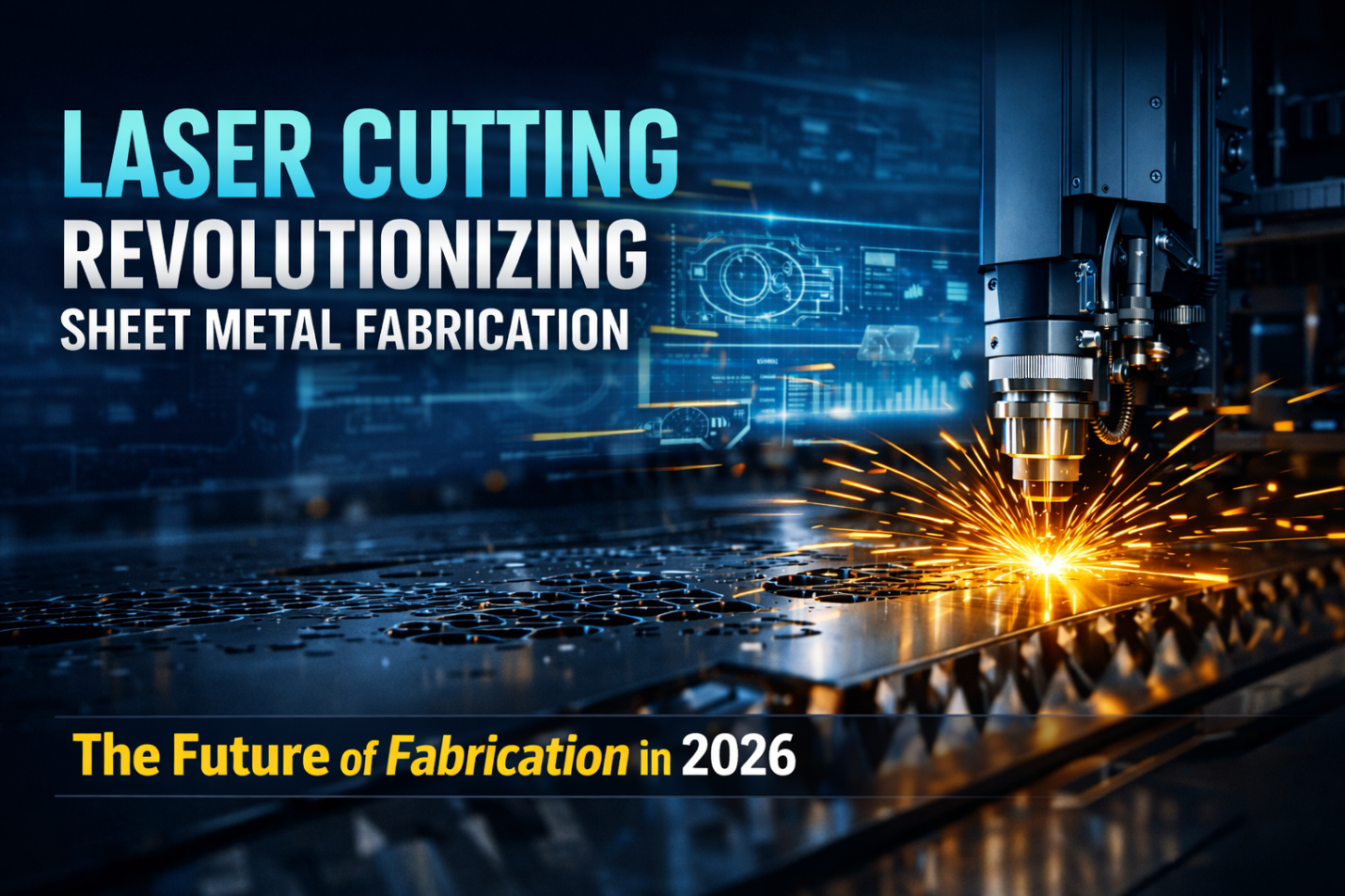
Laser cutting has become a defining technology in modern manufacturing. In 2026, businesses across industrial sectors rely on advanced cutting methods to achieve precision, speed, and consistency. Among all available processes, laser cutting has reshaped how sheet metal fabrication services operate, improving quality while reducing waste and production time across both custom and high-volume projects.
This shift is not about replacing craftsmanship. It is about enhancing it with technology that delivers predictable results at scale while supporting tighter tolerances, faster schedules, and better material utilization for demanding industrial environments.
The Role of Laser Cutting in Modern Metal Fabrication
Laser cutting uses a focused, high-energy beam to cut metal with extreme accuracy. Unlike traditional mechanical cutting tools, the laser does not make physical contact with the material. This reduces friction, tool wear, surface deformation, and dimensional inconsistency during cutting operations.
For manufacturers offering metal cutting service, this approach allows cleaner edges, tighter tolerances, and minimal post-processing. It also supports consistent repeatability across batches, which is critical for parts that must align precisely during assembly.
Why Laser Cutting Is Changing Sheet Metal Fabrication
The impact of laser cutting on sheet metal fabrication services goes beyond speed. It fundamentally changes how parts are designed, produced, and assembled across industries that demand reliability and precision.
Key advantages include:
• Consistent accuracy across high-volume production runs
• Reduced material waste due to narrow kerf widths
• Improved edge quality with minimal secondary finishing
• Faster turnaround for complex and detailed geometries
Together, these benefits help fabrication shops deliver better outcomes while controlling costs and maintaining production efficiency.
Precision and Accuracy at Industrial Scale
In 2026, precision is no longer optional. Industrial components must fit perfectly during assembly to avoid delays, rework, and performance issues. Laser cutting provides micron-level accuracy even on thin materials and intricate part designs.
This level of precision is especially valuable for industries such as manufacturing, construction, electrical systems, and equipment fabrication. Companies offering metal cutting services rely on laser technology to meet exact specifications while maintaining consistency across large production volumes.
Speed and Efficiency in High-Demand Production
Laser cutting systems operate significantly faster than many traditional cutting methods. Modern machines process large sheets quickly while maintaining consistent quality from the first cut to the last.
For clients searching for metal laser cutting services near me, speed often determines project success. Faster cutting reduces downtime, shortens lead times, and supports tight production schedules without sacrificing accuracy or reliability.
Design Flexibility and Complex Geometry
One of the biggest advantages of laser cutting is design freedom. Traditional cutting tools struggle with tight curves, sharp angles, and intricate internal features. Laser systems handle these details with precision and repeatability.
This allows engineers and designers to push boundaries without worrying about manufacturing limitations. For modern sheet metal fabrication services, this flexibility enables innovation, customization, and rapid design changes without added complexity.
Material Versatility Across Industries
Laser cutting supports a wide range of metals, including stainless steel, aluminum, mild steel, and specialty alloys. Thickness variations can also be handled with consistent quality and control.
This versatility makes laser cutting ideal for multi-industry fabrication needs. Businesses offering metal cutting services can serve diverse clients using a single platform, reducing setup time and improving overall production efficiency.
Automation and Digital Integration in 2026
Laser cutting technology is fully integrated with digital design systems. CAD files transfer directly to cutting machines, eliminating manual programming errors and improving overall process accuracy while ensuring consistent results across repeated production cycles and custom fabrication runs.
Automated nesting software maximizes material usage by arranging parts efficiently on each sheet. This reduces scrap, lowers cost, and strengthens sustainability efforts within sheet metal fabrication services, especially for high-volume manufacturing environments that demand predictable output and controlled margins.
Safety Improvements with Laser Cutting
Safety remains a major concern in fabrication environments. Laser cutting improves workplace safety by reducing physical contact with cutting tools and limiting exposure to sharp edges, heat distortion, and vibration commonly associated with mechanical cutting methods.
Proper enclosures, controlled beams, and automated handling systems help protect operators. For companies providing metal laser cutting services near me, strong safety standards reflect professionalism, regulatory compliance, and long-term operational reliability across industrial job sites.
Sustainability and Reduced Waste
Laser cutting supports sustainable manufacturing goals by minimizing material waste and optimizing energy use. Clean cuts reduce offcuts, while precise nesting improves overall sheet utilization and supports better inventory management.
As sustainability becomes a business requirement, laser cutting helps fabrication shops lower environmental impact while maintaining productivity, quality, and cost efficiency across fabrication projects without compromising performance or structural integrity.
Choosing the Right Laser Cutting Partner
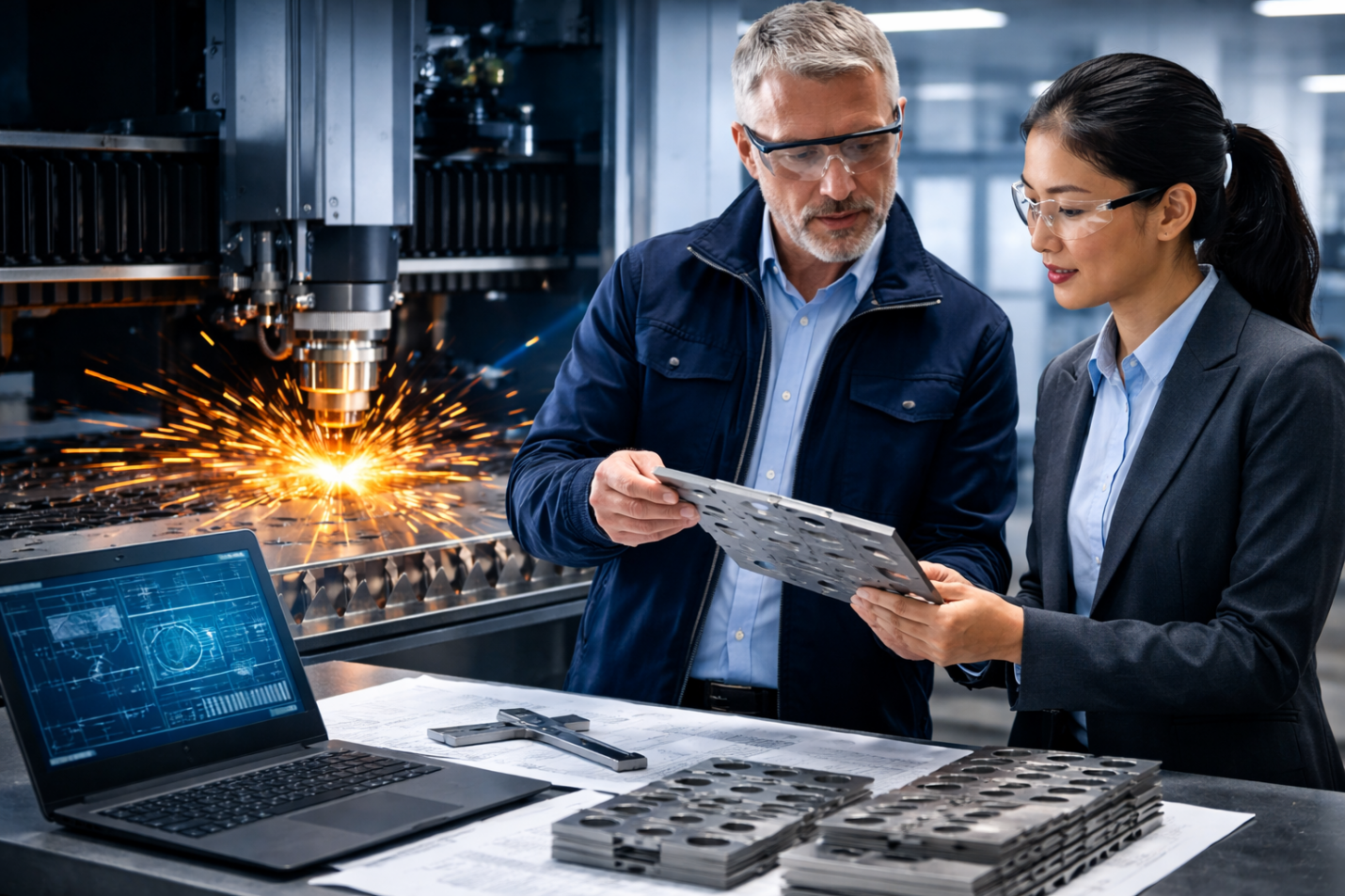
When selecting a provider for metal cutting service, clients should look beyond equipment alone. Experience, quality control processes, project planning discipline, and communication standards all play a critical role in successful fabrication outcomes.
A reliable partner will support design optimization, material selection, and downstream services such as bending and welding. This integrated approach simplifies coordination, reduces delays, and improves final product quality from start to finish.
Conclusion
Laser cutting continues to redefine how industrial components are designed, produced, and assembled. Its role in automation, safety, and sustainability makes it essential for modern fabrication operations.
For businesses seeking dependable metal cutting service and advanced sheet metal fabrication services, JLL FAB delivers precision laser cutting, integrated fabrication support, and industry-focused expertise built for today’s manufacturing demands. Partner with us to move projects forward with confidence, accuracy, and efficiency.