
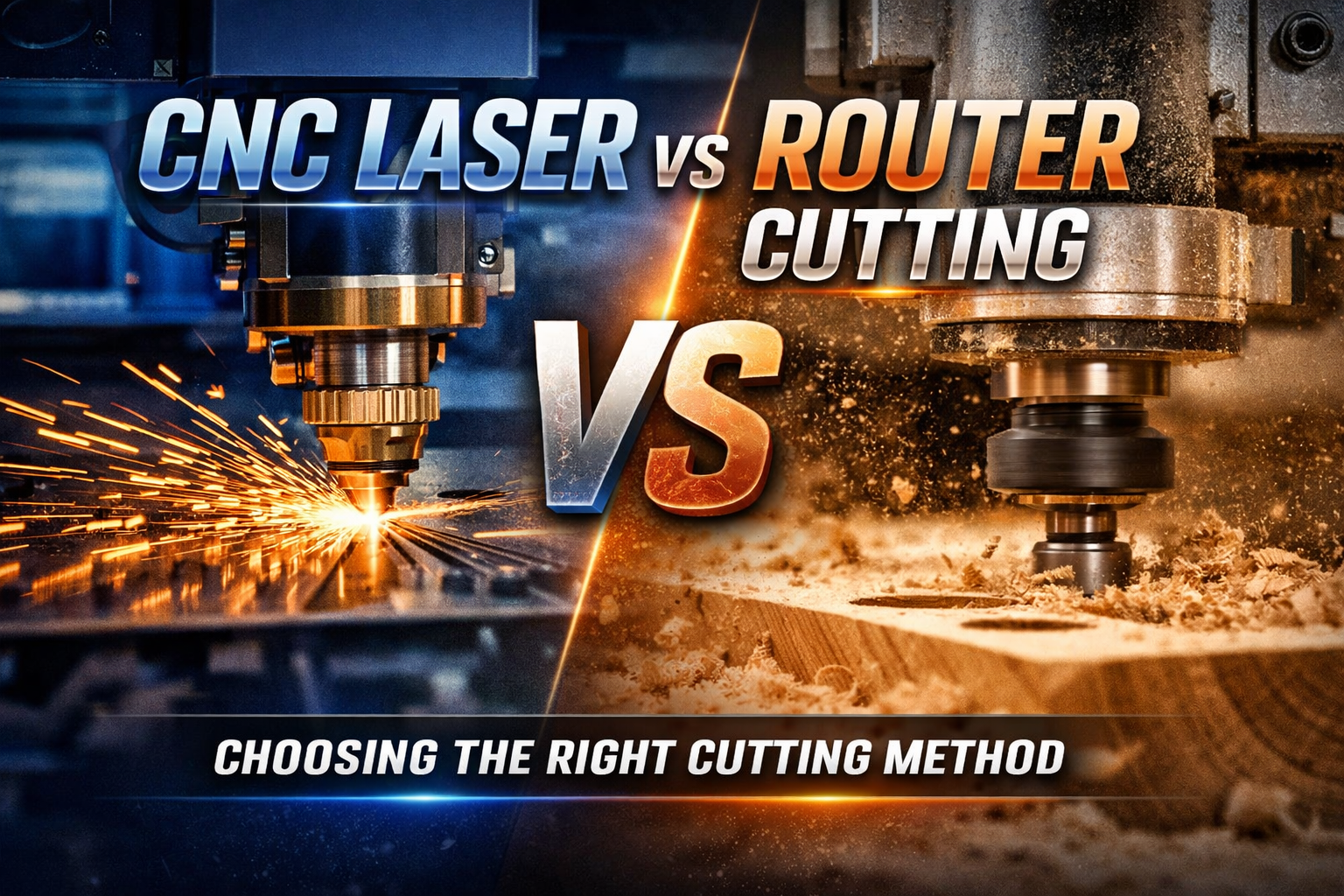
CNC Laser vs Router Cutting: Pick the Winner
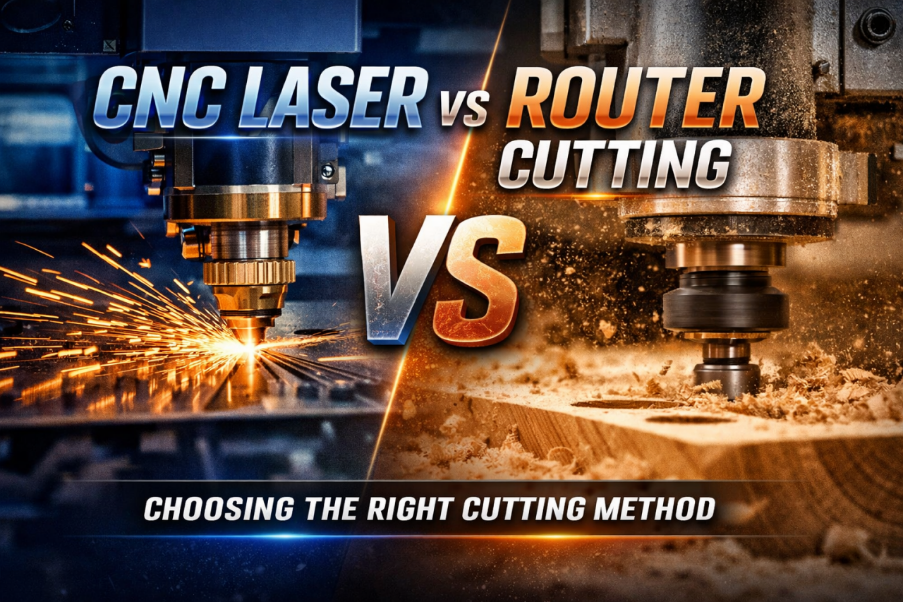
Choosing the right cutting method can shape the quality, cost, and speed of any fabrication project. CNC Laser Cutting and router cutting are two widely used technologies, each built for different materials, tolerances, and production goals. While both deliver reliable results, their strengths vary based on precision needs, material thickness, and design complexity. Understanding how these processes differ helps manufacturers avoid costly mistakes and production delays. This guide breaks down the key factors that separate laser cutting from router cutting, helping you confidently decide when CNC Laser Cutting or router cutting is the better fit for your application, timeline, and budget.
Understanding the Two Cutting Technologies
Laser cutting and router cutting rely on very different principles to shape materials. Laser cutting uses a concentrated beam of light to melt or vaporize material with extreme accuracy. The process is contactless, meaning there is no physical pressure applied to the surface during cutting.
Router cutting, on the other hand, uses a rotating cutting tool to physically remove material. The tool follows programmed paths and relies on direct contact to shape the workpiece. This mechanical approach makes router cutting effective for certain materials and thicknesses, but it also introduces factors like vibration and tool wear.
At a fundamental level, the difference comes down to heat versus force. Understanding this distinction is key to evaluating performance, finish quality, and overall suitability for specific fabrication needs.
Precision and Edge Quality Comparison
Precision and edge finish are often deciding factors when selecting a cutting process. CNC Laser Cutting Machines are known for delivering extremely tight tolerances, making them ideal for parts that require clean lines and intricate detailing. Because the cutting process is non-contact, there is minimal material distortion and highly consistent edge quality.
Router cutting relies on physical contact between the tool and material, which can introduce slight variations depending on tool condition and cutting speed. Edges may require additional finishing, especially on detailed designs or harder materials. When surface quality and accuracy are critical, understanding how CNC Laser Cutting Machines differ from mechanical routing helps manufacturers set realistic expectations for final output.
Material Compatibility and Thickness Handling
Material choice plays a major role in determining the right cutting method. Laser CNC Cutting Services are commonly selected for projects involving metals and thin materials that demand accuracy without physical stress. This approach minimizes deformation and maintains structural integrity, even on delicate components.
Router cutting is often preferred for thicker or softer materials such as wood, plastics, and composites. While effective, it may struggle with fine details on harder surfaces. Knowing when Laser CNC Cutting Services offer better material control helps manufacturers balance durability, precision, and production efficiency before committing to a cutting process.
CNC Laser Cutting
When precision, consistency, and clean finishes matter most, CNC Laser Cutting becomes a reliable choice for modern fabrication needs. This method focuses on accuracy-driven results while protecting material integrity throughout the cutting process.
Key advantages include:
- High-precision output: CNC laser cutting delivers tight tolerances and sharp edges, making it ideal for detailed parts and complex geometries.
- Non-contact process: The absence of physical force reduces material stress and helps maintain dimensional stability.
- Minimal finishing needs: Clean cuts lower the need for secondary processing, saving time and labor.
- Design flexibility: Supports intricate patterns and fine detailing without compromising consistency.
CNC Laser Cutting Machines
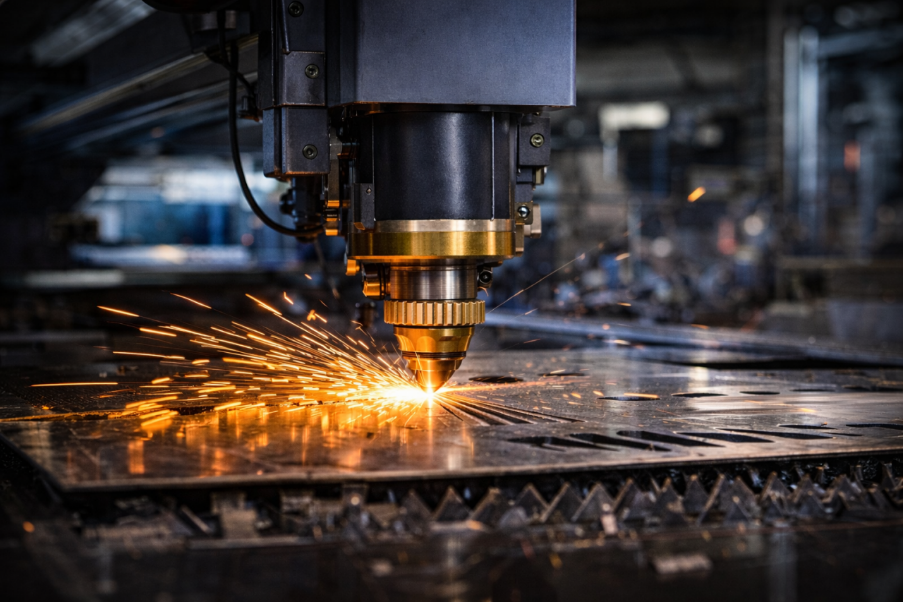
Modern fabrication environments rely on CNC laser cutting machines for speed, automation, and production consistency. These systems are designed to handle repeatable tasks with minimal variation, making them well-suited for both prototyping and large-scale manufacturing.
Key capabilities include:
- Automated accuracy: CNC laser cutting machines follow programmed paths with consistent precision across every production run.
- High throughput: Fast cutting speeds support efficient handling of high-volume orders.
- Repeatable results: Uniform output reduces errors and material waste over time.
- Production stability: Controlled environments help maintain quality even during extended operation cycles.
Router Cutting Strengths and Limitations
Router cutting remains a practical option for many fabrication projects, especially those involving thicker or softer materials. Its mechanical cutting approach allows manufacturers to work efficiently with wood, plastics, and composite sheets where extreme precision is not the primary requirement.
Key strengths and limitations include:
- Material versatility: Well-suited for non-metal materials and thicker stock that may not be ideal for laser processing.
- Cost efficiency: Often more affordable for certain applications due to lower operating costs.
- Tool dependency: Cutting quality depends on tool condition, speed, and operator setup.
- Finishing needs: Edges may require sanding or secondary processing to achieve a smooth finish.
Speed, Cost, and Production Efficiency
Speed and cost efficiency often determine which cutting method fits a production workflow. Laser cutting typically offers faster turnaround for detailed designs, especially in high-volume runs where automation reduces setup time. Router cutting may take longer on complex paths, but it performs well for straightforward cuts on thicker materials.
Production costs also vary based on material type, labor involvement, and post-processing needs. Laser cutting can reduce finishing time, while router cutting may lower upfront expenses for specific jobs. Evaluating project scale, repeatability, and delivery timelines helps manufacturers choose the process that best balances speed, cost control, and operational efficiency.
Conclusion
There is no single winner when comparing laser cutting and router cutting. The right choice depends on material type, design complexity, tolerance requirements, and production volume. Projects that demand high accuracy and clean finishes benefit from laser-based processes, while thicker or softer materials may be better suited for router cutting.
Understanding how each method impacts cost, speed, and final quality allows manufacturers to make confident, informed decisions. If you are evaluating the best cutting solution for your next project, JLL Fab offers expert guidance and precision fabrication support to help you move forward with confidence.